Charging & power · Buying advice
Makita and Milwaukee Batteries and Chargers Buying Guide
Match compatible Makita and Milwaukee batteries and chargers by chemistry, voltage, platform and the number of ports you need.
In this guide · Jump to a section
Choosing a compatible power-tool battery or charger starts with a three-part match: battery chemistry, voltage range and battery platform. A pack with the right brand name but the wrong chemistry can be unsuitable for a charger. A charger with a familiar shape can still be wrong for an older battery family.
This guide compares Makita and Milwaukee-compatible options in this range, from 7.2V NiCd equipment to 18V lithium-ion multi-port chargers. Use it to read labels, separate older and newer battery types, and select a charging setup that suits the number of packs you manage.
Read the battery label in the right order
First locate the chemistry. The products here refer to NiCd, NiMH and lithium-ion batteries. Chemistry is not a minor detail: it is a core part of charger selection. Do not select a charger by voltage alone, and do not put a battery into a charger that is not stated for that chemistry.
Then check voltage. This range includes a Makita-compatible 7.2V 3500mAh NiCd replacement battery, a Makita NiMH/NiCd charger stated for 7.2V to 18V, and several 14.4V to 18V or 18V lithium-ion chargers. Read the voltage printed on your existing pack rather than using a tool's marketing family name.
Finally, compare the platform and part numbers. For example, the 7.2V battery listing names Makita 7000, 7002, 7033 and several part numbers. The Makita lithium-ion charger listings name BL-series examples. Milwaukee products identify M12 or M18. The label, slide connection and stated series should all point to the same choice.
Battery and charger compatibility map
| Product group | Chemistry named | Voltage or platform named | Best selection check |
|---|---|---|---|
| Makita 7000 replacement battery | NiCd | 7.2V, 3500mAh | Match the listed 7000-series tool or battery codes. |
| Makita DC1414T/DC1804-compatible charger | NiMH and NiCd | 7.2V to 18V | Confirm both chemistry and the listed battery family. |
| Makita DC18RC-compatible charger | Lithium-ion | 14.4V to 18V | Compare your BL-series pack with the listing. |
| Makita dual or four-port charger | Lithium-ion | 14.4V to 18V or 18V | Choose port count for the number of packs. |
| Milwaukee dual charger | Lithium-ion | M12 and M18, 12V to 18V | Match the battery platform first. |
| Milwaukee four-port charger | Noted for compatible M18 batteries | 18V / M18 | Confirm the pack is a listed M18 type. |
This map only reflects the product information supplied for these items. It is not permission to use a charger with any battery at a matching voltage. Exact chemistry, intended platform and physical connection remain the final tests.
Pick the charger capacity for your work pattern
A single-battery charger can suit occasional jobs and a small battery collection. The Makita DC18RC-compatible charger is a 14.4V to 18V lithium-ion option with an AU plug. It is a useful choice when one compatible Makita pack is charged at a time and bench space is limited.
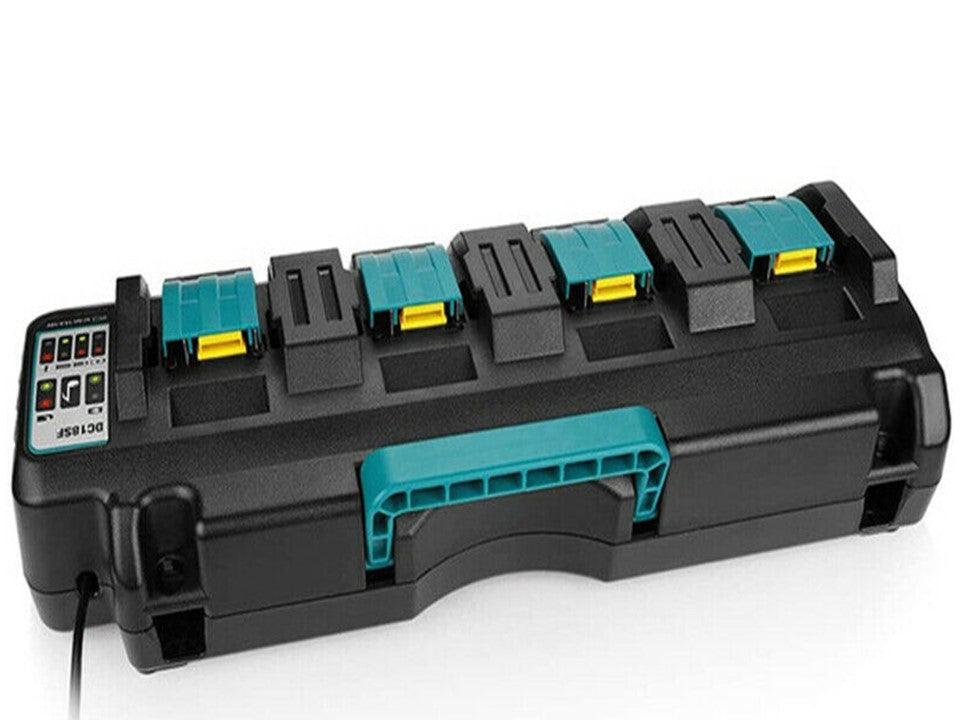
Choose extra ports when several compatible packs need attention during the same work period. The Makita four-port listing states it can charge up to four 14.4V to 18V lithium-ion batteries simultaneously and includes a USB port. The Makita dual-port listing is for simultaneous charging of two 18V lithium-ion batteries.
For Milwaukee battery users, separate the M12/M18 dual charger from the M18 four-port charger. The dual model is listed for M12 and M18 packs. The four-port model is stated for Milwaukee 18V batteries. This difference matters if your tools use the smaller M12 platform as well as M18.
Safe charging and battery care
Set chargers on a firm, dry surface with open air around them. Keep them away from flammable materials, direct water exposure and piled clothing. Use the supplied or specified AU power connection rather than improvised adaptors. Check the cable, case, contacts and vents before connecting a battery.
Insert a battery gently and only in the orientation intended by the charger. If it will not seat, remove it and check the label and rails. Do not alter the casing, cover terminals with conductive objects or leave damaged packs in service. A cracked, swollen, leaking or unusually hot battery needs careful handling and should not be charged.
When a charge cycle finishes, remove the pack as directed by the product instructions and store it away from metal objects. Keep battery contacts clean and dry. If a charger shows an unexpected indicator, stops repeatedly or produces excessive heat, disconnect it from power and review the relevant instructions before another attempt.
Compatible batteries and chargers at OfficeCatch
OfficeCatch has options for older Makita battery systems as well as Makita and Milwaukee lithium-ion workflows. Match the details on your own pack with the intended product group before placing an order.
- Makita-compatible 7.2V 7000-series NiCd battery is listed at 3500mAh for named older tools.
- Makita-compatible 7.2V–18V NiMH/NiCd charger names DC1414T, DC1414F and DC1804.
- Makita 18V lithium-ion four-port rapid charger is listed for four 14.4V–18V packs and has USB.
- DC18RC-compatible Makita lithium-ion charger names BL1830, BL1850 and BL1860B in its title.
- Milwaukee M12 and M18 dual rapid charger is the stated multi-voltage option for both platforms.
- Milwaukee M18 four-port rapid charger is listed for charging up to four 18V batteries.
- Makita DC18RD-compatible dual-port charger is the listed two-battery 18V lithium-ion option.
Make the final decision from the battery label, not the colour of the tool or charger. That method keeps older NiCd and NiMH equipment separate from lithium-ion systems and makes multi-port choices easier to compare.
FAQs
Can I charge a Makita NiCd battery in a lithium-ion charger?
Only use a charger that is stated for your battery chemistry, voltage and battery family. The Makita-compatible NiMH/NiCd charger in this range is listed for 7.2V to 18V NiMH and NiCd batteries. The lithium-ion charger listings name Makita lithium-ion battery ranges instead, so they should not be treated as interchangeable.
What Makita batteries fit a DC18RC-compatible charger?
The DC18RC-compatible listing names Makita 14.4V to 18V lithium-ion batteries and gives BL1830, BL1850 and BL1860B as examples in its title. Confirm your battery's chemistry, voltage and physical series against the listing before charging. A similar voltage does not make an older NiCd or NiMH pack suitable.
Can a Milwaukee M12 and M18 charger charge both battery sizes?
The dual rapid charger in this guide is listed as compatible with Milwaukee M12 and M18 battery packs and is described as a 12V to 18V multi-voltage unit. Check that your pack belongs to one of those named platforms. Do not use it with a battery that has different chemistry or an unsupported connection.
Is a four-port battery charger faster than a single charger?
A four-port charger can charge more than one compatible battery at the same time when the product says it supports simultaneous charging. That helps manage several packs in a work area. It does not remove the need to match each pack's chemistry and voltage, or to keep the charger ventilated during use.
Products linked in this guide
-
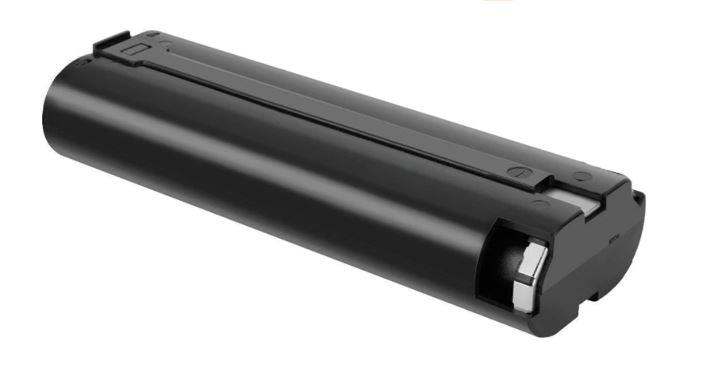
MAKITA Compatible 7.2v Battery 7000 3500mAh Ni-CD 7002 7033 6012D 632003-2 632002-4 191679-9 $37.00 NZD View current product details
-
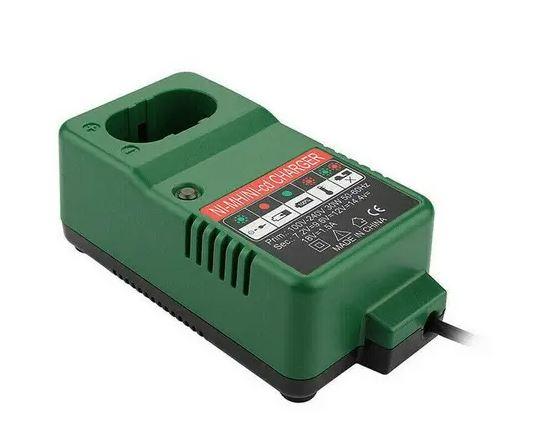
Charger for Makita NiMH NiCd Battery DC1414T DC1414F DC1804 7.2V-18V Tool $38.00 NZD View current product details
-
Durable 4 port Rapid Charger For Makita 18v Li-ion Battery | Optimized Output With USB Port $177.00 NZD · Sold out View current product details
Check the product page for current specifications, compatibility and availability.